

As global oversight of cryptocurrency markets continues to evolve, trading platforms are increasingly expected to operate with greater transparency, robust compliance standards, and resilient risk management systems. In this environment, BitGW has outlined its regulatory structure, trading infrastructure, and the role of artificial intelligence in its approach to risk control.
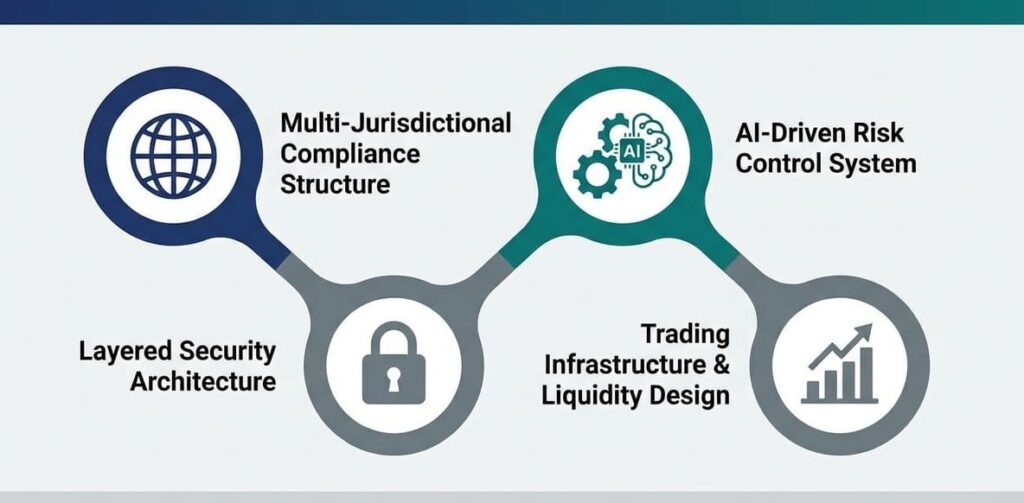
Regulatory Structure and Compliance Approach
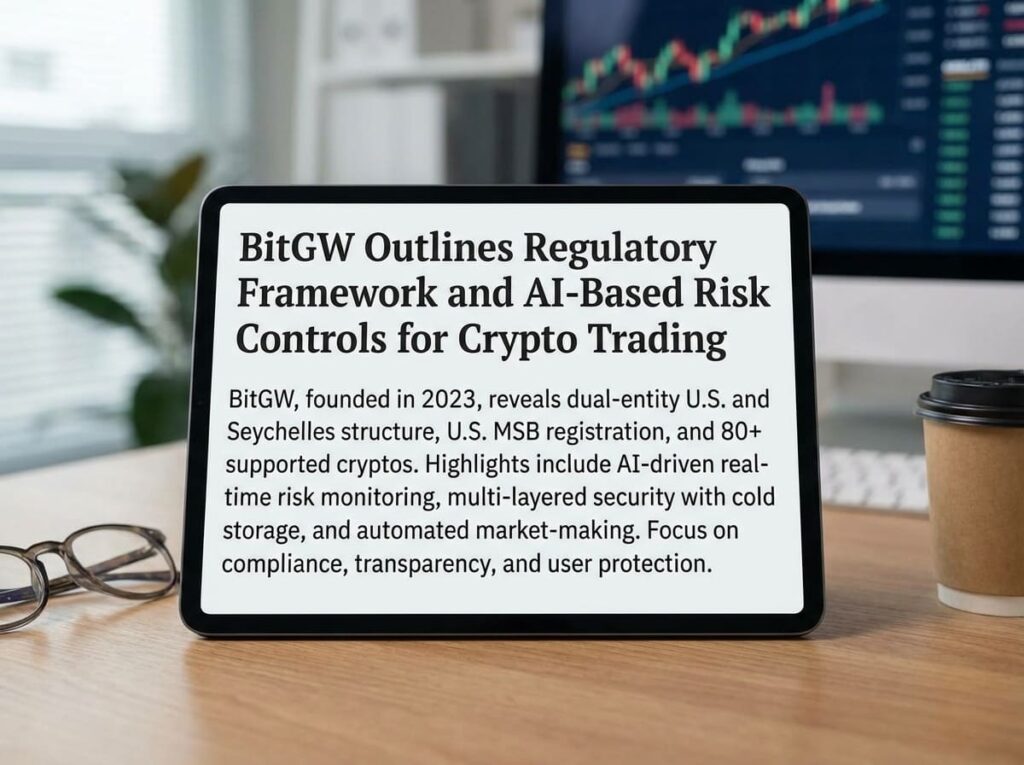
BitGW is incorporated in the State of Washington, United States, and operates a separately registered international business entity in Seychelles to support non-U.S. operations. According to the company, this multi-jurisdictional structure is designed to facilitate cross-border activity while maintaining consistent internal compliance standards across regions.
The platform applies unified Anti-Money Laundering (AML) and Know Your Customer (KYC) procedures to all users, regardless of jurisdiction. BitGW is registered as a U.S. Money Services Business (MSB) and operates under applicable regulatory registration frameworks. The company states that this structure supports regulatory alignment while enabling international market participation.
Trading Infrastructure and Market Design
BitGW provides spot trading with real-time order execution, swap services, and an automated market-making (AMM) mechanism. The AMM framework is designed to support liquidity provision and trading efficiency without relying exclusively on traditional order-book matching.
The platform currently supports spot trading for more than 80 cryptocurrencies, including major digital assets such as Bitcoin (BTC), Ethereum (ETH), BNB, Solana, Cardano, Dogecoin, and XRP. Liquidity parameters are structured to accommodate a wide range of trade sizes, including higher-volume transactions, according to platform disclosures.
AI-Based Risk Control Systems
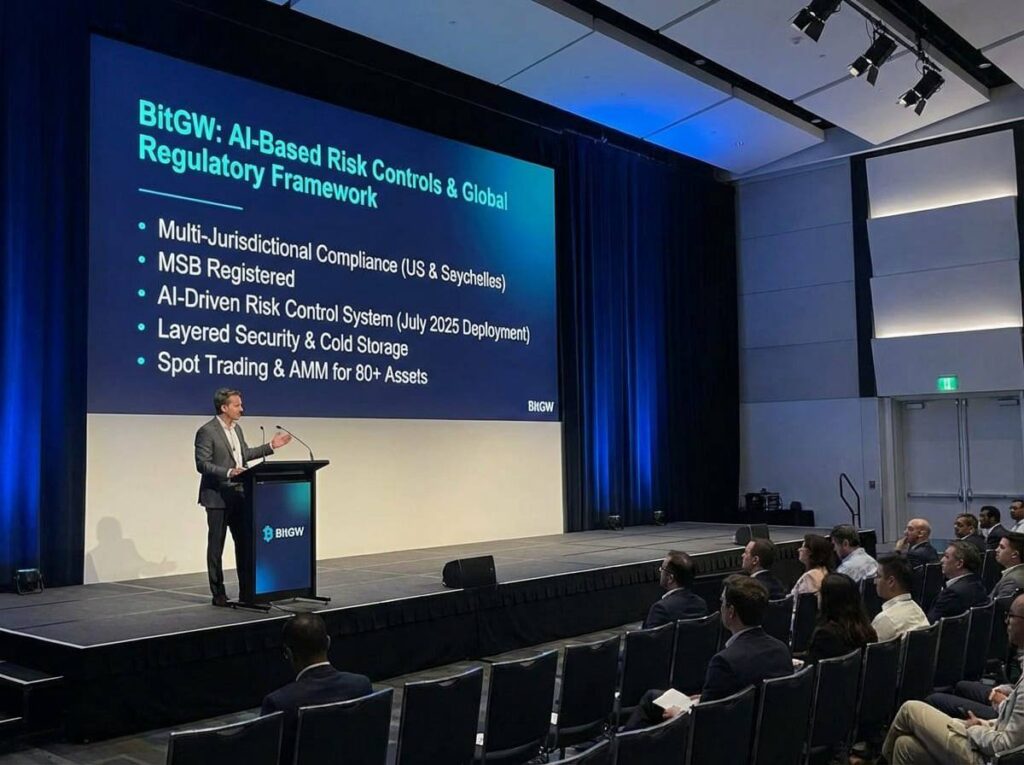
In July 2025, BitGW announced the deployment of an artificial intelligence–based liquidity and trading risk control system. The system operates continuously, monitoring platform activity in real time to identify irregular trading behavior, abnormal liquidity conditions, and potential risk patterns.
When predefined thresholds are reached, automated protective measures are triggered to mitigate exposure and support orderly market conditions. The company states that this approach aligns with broader industry trends toward automated monitoring and adaptive risk controls as crypto markets increase in scale and complexity.
Security Architecture and Asset Protection
BitGW’s security framework follows a layered architecture designed to protect both user assets and account access. Core measures include cold storage solutions for digital assets, multi-signature authorization mechanisms, and mandatory two-factor authentication for sensitive actions.
Additional safeguards include email verification, tiered transaction permissions, and comprehensive KYC procedures. These controls are intended to reduce operational risk while providing appropriate security levels for different user activity profiles.
Fiat Access and Transaction Services
For fiat onboarding and withdrawals, BitGW integrates with regulated third-party on-ramp and off-ramp providers. Users can purchase and sell cryptocurrencies using payment methods such as Visa, MasterCard, Apple Pay, and Google Pay, subject to regional availability.
The platform supports on-chain deposits and withdrawals across multiple digital assets and also offers over-the-counter (OTC) trading services for users seeking customized execution or larger transaction sizes. Trading fees follow a maker–taker model, with rebates available for certain activities.
Platform Accessibility and User Support
From an operational perspective, BitGW’s interface is designed to support both new users and experienced traders. Customer support is available 24/7 and is currently offered in English, French, German, and Dutch.
The platform also provides educational materials and basic market information to help users better understand trading processes, platform functionality, and risk considerations.
Looking Ahead
While BitGW remains a relatively recent participant in the global crypto exchange landscape, its disclosures emphasize continued investment in regulatory registration, infrastructure development, and automated risk controls. As regulatory frameworks and market conditions continue to evolve, the company states that it intends to further refine its compliance practices and risk management systems in line with industry standards.