
In digital asset markets, volatility is not an exception — it is part of the system.
Extreme market events may include sharp price fluctuations, sudden liquidity contractions, abnormal trading behavior, or broader market stress triggered by macroeconomic or industry-specific factors. As a centralized trading platform, BitGW does not attempt to control markets or predict outcomes. Instead, our responsibility is to ensure platform stability, fair execution, and transparent risk management during periods of stress.
This article outlines the principles and mechanisms BitGW applies when markets experience extreme conditions.
1. Market Neutrality: BitGW Does Not Intervene in Prices
BitGW operates as a trading infrastructure provider, not a price-setting entity.
- Prices on BitGW are formed by market supply and demand
- The platform does not manipulate prices, halt trades to favor specific participants, or intervene to influence market direction
- During periods of high volatility, all matching and settlement processes continue to follow predefined system rules
Our role is to maintain orderly execution, not to judge whether prices are “too high” or “too low.”
2. Liquidity Stress and Order Execution
During extreme market movements, liquidity conditions may change rapidly.
BitGW’s approach includes:
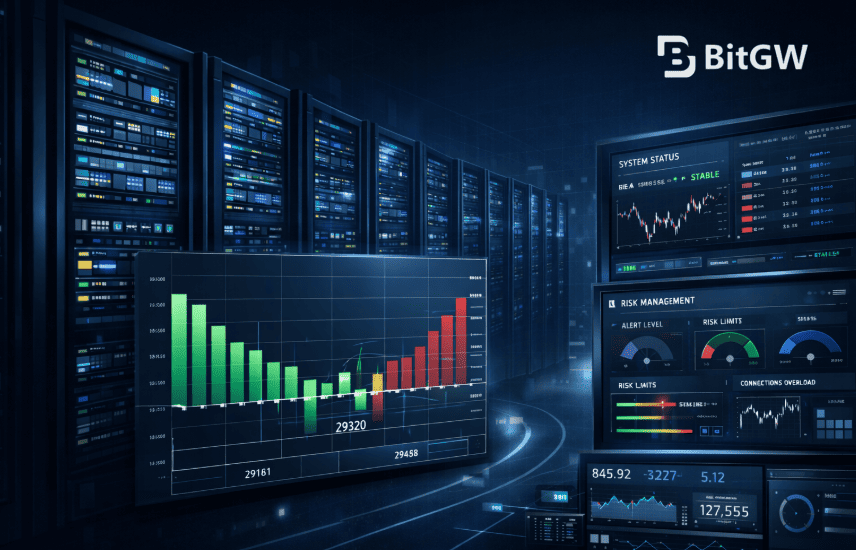
- Continuous monitoring of order book depth and execution quality
- Automated safeguards to prevent system overload during traffic spikes
- Maintaining consistent matching logic so that all users are treated equally under the same rules
BitGW does not selectively delay, accelerate, or prioritize orders based on user identity or position size.
3. System Stability and Infrastructure Protection
Extreme events often coincide with sharp increases in user activity.
To maintain platform availability:
- Core systems are designed with redundancy and scalability in mind
- Traffic management mechanisms help mitigate abnormal request surges
- Technical teams monitor system performance in real time during volatile periods
If temporary service limitations are ever required to protect overall system integrity, such actions are taken only when necessary and with a focus on minimizing user impact.
4. Risk Controls Are Rule-Based, Not Discretionary
All risk control mechanisms on BitGW follow predefined logic.
This means:
- No manual price intervention
- No discretionary freezing of accounts based on market direction
- No selective restrictions applied to individual users during volatility
Risk controls are designed to protect the platform’s operational stability, not to shield users from market losses or guarantee outcomes.
5. Transparency During Abnormal Conditions
When extreme conditions affect platform operations:
- Relevant notices are communicated through official channels
- Users are informed of service status changes when applicable
- BitGW avoids speculative commentary and focuses on factual updates
Clear communication helps users make informed decisions without unnecessary panic or misinformation.
6. User Responsibility and Market Risk Awareness
Digital asset markets inherently carry risk.
While BitGW strives to provide a stable and fair trading environment:
- The platform does not guarantee profits or protect users from losses
- Market risk remains the responsibility of each participant
- Users are encouraged to assess their own risk tolerance, especially during periods of high volatility
Extreme market events highlight the importance of informed participation and prudent risk management.
7. Continuous Review and Improvement
After significant market events, BitGW conducts internal reviews to assess:
- System performance under stress
- Effectiveness of existing safeguards
- Opportunities to improve resilience and user experience
These reviews are part of BitGW’s long-term commitment to operational maturity and responsible platform development.
Closing Note
Extreme market events test not only traders, but also the integrity of trading infrastructure.
BitGW’s approach is grounded in neutrality, consistency, and transparency. We do not attempt to eliminate market risk — instead, we focus on ensuring that all users interact with the market through a platform that remains stable, rule-driven, and fair, even under pressure.