

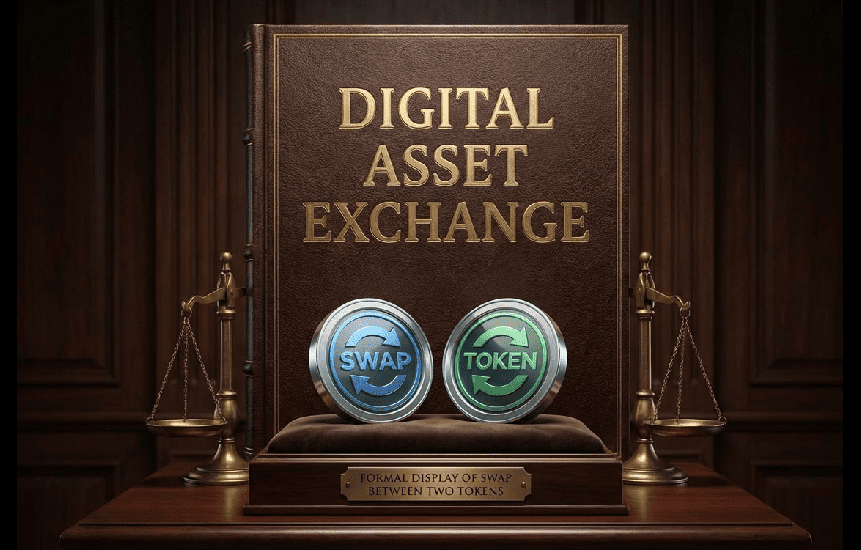
In traditional finance, currency exchange is shaped by borders, banking hours, and institutional layers. Converting one fiat currency into another typically involves foreign exchange pricing, settlement delays, intermediary banks, and jurisdictional constraints. These are not temporary inefficiencies—they are built into how the system operates.
Crypto faces a similar need—converting one asset into another—but the underlying structure is fundamentally different. Digital assets exist as native units of value, each with its own liquidity profile and market behavior. While price differences still matter, the execution of conversions is no longer tied to legacy financial infrastructure.
This structural shift has placed swap functionality at the center of modern crypto markets.
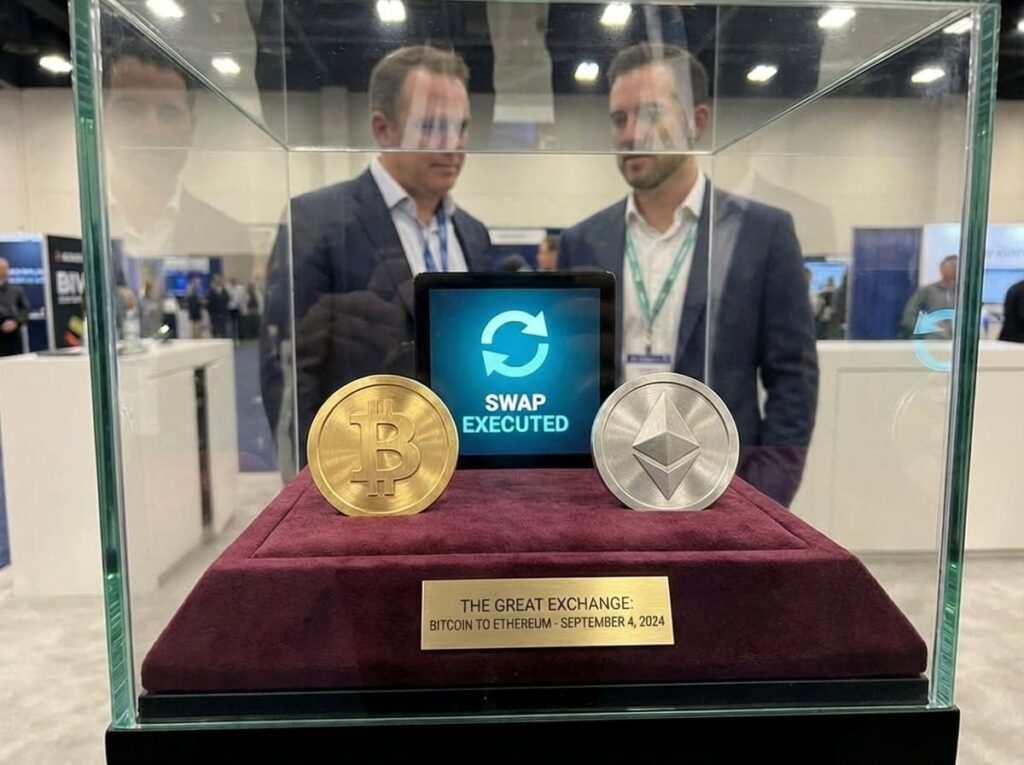
Swap as Core Financial Infrastructure
At its core, a swap is a direct conversion between assets. Unlike traditional trading, the objective is not speculation or price discovery, but efficient value exchange. Users focus on outcomes—moving value quickly and reliably—rather than managing market exposure.
Within a centralized exchange, swaps are executed in real time using unified infrastructure and aggregated liquidity. Conversions can be completed in milliseconds, without reliance on banking rails, settlement windows, or cross-border intermediaries. This is not merely a speed advantage; it represents a structural change in how value moves.
As a result, asset exchange becomes continuous and global—available at any time, regardless of location.
Liquidity Aggregation and Execution Efficiency
Swap efficiency depends on automated execution systems that route transactions across multiple liquidity sources. By doing so, these systems minimize slippage, reduce unnecessary price gaps, and eliminate the need for manual order placement.
From the user’s perspective, this transforms asset conversion into a financial utility. Market complexity remains in the background, while the experience stays simple, predictable, and consistent across different market conditions.
This abstraction does not remove market dynamics—it manages them, allowing users to access liquidity without advanced trading expertise.
Beyond Trading: Time, Borders, and Financial Utility
One of the most significant constraints of traditional finance is time. Settlement cycles, banking cutoffs, and cross-border processing slow the movement of value. Swap mechanisms in crypto markets operate independently of these limitations.
When asset conversion is instant and always available, value becomes more fluid. This capability extends beyond trading into payments, transfers, and cross-asset interactions—any scenario where timely conversion is essential.
In this context, swap functionality supports the transition of digital assets from speculative instruments to practical financial tools.
A Foundational Layer for Digital Finance
As crypto markets continue to mature, seamless asset conversion is no longer optional—it is a requirement. The future of digital finance will be defined not only by the assets that exist, but by how efficiently value can move between them.
Swap mechanisms address this need at a foundational level. By reducing friction, compressing time, and abstracting complexity, they enable consistent value exchange across assets and markets.
Swap is not a peripheral feature of crypto finance. It is core infrastructure—supporting payments, liquidity access, and global value movement. As finance moves toward a digital-first model, the ability to exchange value efficiently may prove as important as the value itself. In that future, swap will be an essential pillar of global crypto and blockchain-based payments.