

Borderless Financial Infrastructure Continues to Emerge
June 1, 2025
Stablecoins are increasingly transitioning from specialized crypto instruments into a core layer of the global digital payments landscape. Between early 2023 and the first quarter of 2025, stablecoin-based transactions are estimated to have facilitated over $90 billion in payment settlements worldwide, underscoring their expanding role in real economic activity.
Once largely confined to cryptocurrency trading environments, stablecoins are now being adopted across enterprise settlements, cross-border commerce, and digitally native services, as market participants seek faster, more efficient, and globally accessible value-transfer mechanisms.
From Crypto Utility to Financial Infrastructure
Over the past several years, stablecoins have undergone a notable structural shift. Initially designed to mitigate volatility within crypto markets, they are now extending well beyond exchanges and trading platforms into broader financial use cases.
As regulatory clarity improves across major jurisdictions and institutional participation deepens, stablecoins are increasingly viewed as infrastructure-level financial tools rather than experimental technologies. High-profile public market activity among stablecoin-related firms has further reinforced this transition, signaling growing confidence from both regulators and institutional investors.
For platforms focused on the future of global finance, stablecoins represent a foundational component of a system where capital movement is no longer limited by geography, banking hours, or legacy settlement networks.
Growth Trends Supported by Market Data
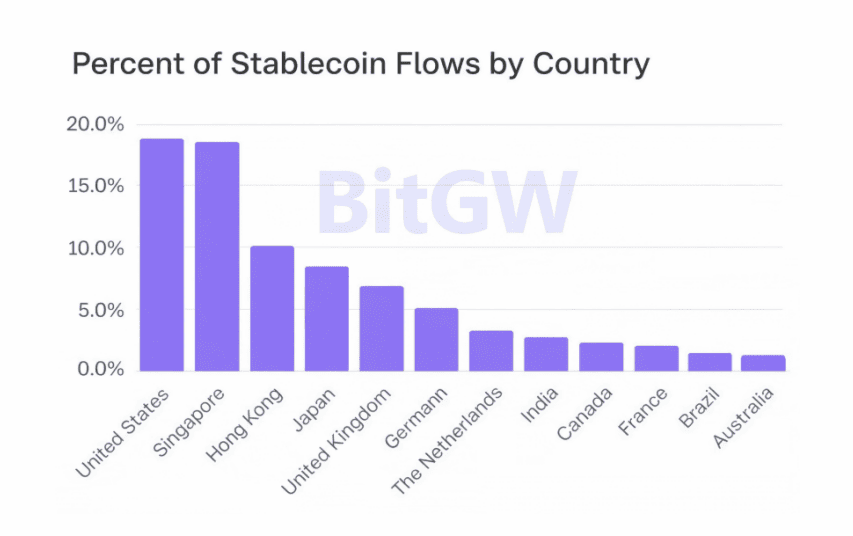
Recent industry research points to rapid expansion in stablecoin adoption:
- Global stablecoin supply has grown from well below $20 billion in 2020 to over $220 billion by 2025
- More than 140 million blockchain addresses are estimated to hold stablecoins
- Daily active transaction addresses regularly reach high single-digit millions
- From 2023 through early 2025, cumulative stablecoin payment settlement volume surpassed $90 billion
Usage patterns continue to evolve:
- Business-to-business (B2B) payments now account for the largest share of activity
- Peer-to-peer transfers remain a foundational use case
- Platform settlements and card-linked transactions are among the fastest-growing segments
These shifts suggest that stablecoins are increasingly functioning as a universal settlement layer for digital commerce, rather than solely as consumer-facing transfer tools.
Why Stablecoins Are Well-Suited for Online Payments
Stablecoins combine the relative price stability of fiat currencies with the efficiency of blockchain-based infrastructure, addressing several longstanding limitations of traditional payment systems:
- Speed: Near-real-time settlement on a 24/7 basis
- Cost efficiency: Transaction fees that can be minimal or near zero
- Transparency: On-chain verification and traceability
- Accessibility: Reduced dependence on local banking rails
According to global financial institutions, traditional cross-border remittance costs still average above 6%, often accompanied by settlement delays measured in days. Stablecoins, by contrast, enable low-friction, near-instant global value transfer, making them increasingly attractive for enterprises, fintech firms, and multinational organizations.
As a result, financial institutions and technology companies continue to pilot stablecoin-based settlement frameworks, even as regulatory alignment progresses at different speeds across regions.
Regional Adoption Reflects Local Market Conditions
While stablecoin usage is global, adoption patterns vary significantly:
- Emerging markets
Stablecoins are commonly used to manage currency volatility and facilitate cross-border trade and remittances - Asia-Pacific
One of the most active regions for digital asset flows, with stablecoins deeply embedded in trading, settlement, and digital finance ecosystems - Europe and North America
Adoption is increasingly driven by cross-border B2B transactions, international settlements, and digital service payments, with a strong emphasis on compliance and risk management
These differences highlight that stablecoins are not replacing fiat currencies, but rather extending the functional reach of existing financial systems.
The Road Ahead: Institutionalization, Automation, and Borderless Finance
Looking forward, the stablecoin sector is expected to continue evolving along three key dimensions:
Institutionalization
Greater regulatory engagement, enhanced disclosure standards, and public market participation are contributing to higher levels of transparency and trust.
Automation
As artificial intelligence and automated digital systems proliferate, stablecoins are increasingly positioned as a machine-native medium of exchange, capable of supporting high-frequency, low-value transactions across borders.
Borderless Finance
Financial activity is gradually decoupling from geographic and temporal constraints, giving rise to an always-on, globally interconnected digital financial layer.
BitGW’s Perspective
Within this evolving landscape, BitGW views stablecoins as a core building block of borderless financial infrastructure, rather than a standalone product category.
BitGW’s long-term focus is on supporting a more open, efficient, and globally accessible financial environment—one that enables seamless value transfer across markets and user groups. By emphasizing security, regulatory alignment, and sustainable growth, the platform aims to contribute to the development of next-generation global finance.
Conclusion
Stablecoins have progressed beyond their origins as crypto-native tools and are emerging as an important alternative within the global online payments ecosystem. In just a few years, settlement volumes exceeding $90 billion reflect their growing relevance across enterprise finance, digital commerce, and cross-border transactions.
As financial infrastructure continues to digitize and globalize, the most transformative changes often occur quietly in the background. If current trends persist, stablecoins may become as pervasive—and as invisible—as the internet itself.
It is on this foundation that borderless finance continues to take shape.