
Introduction
When discussing the innovations that have shaped the digital asset industry, most people immediately think of Bitcoin, Ethereum, decentralized finance, or exchange-traded funds.
Yet one of the most important developments in the evolution of digital assets has been far less controversial and, in many ways, far more practical: stablecoins.
Over the past decade, stablecoins have quietly become the foundation upon which much of the digital asset ecosystem operates. What began as a simple tool for crypto traders has evolved into a critical layer supporting liquidity, settlement, payments, treasury management, and increasingly, global financial infrastructure.
For exchanges, institutions, businesses, and users alike, stablecoins are no longer just another category of digital assets. They have become the backbone of digital markets.
The Infrastructure Behind Every Trade
Every financial market requires a reliable unit of account.
In traditional finance, national currencies serve this role. Stocks are priced in dollars, euros, pounds, or yen. Market participants need a stable reference point to measure value, manage risk, and settle transactions.
Digital asset markets are no different.
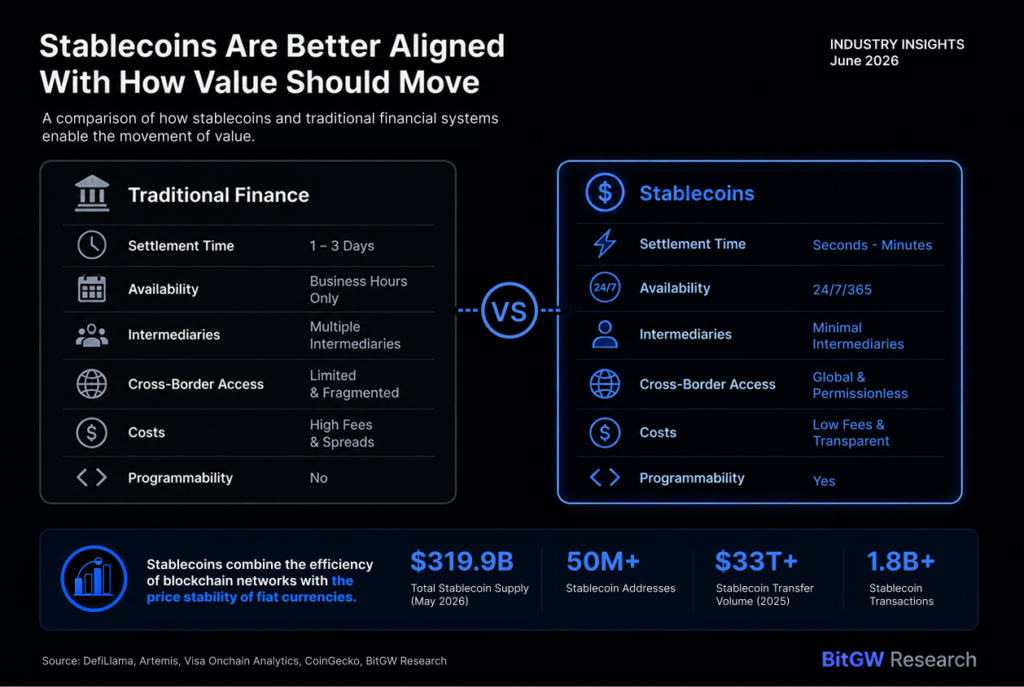
Before the emergence of stablecoins, traders often faced significant challenges when moving between volatile cryptocurrencies and fiat currencies. Bank transfers were slow, costly, and often unavailable across borders. Settlement could take days, creating operational friction and limiting market efficiency.
Stablecoins solved this problem by introducing a digital representation of fiat currency that could move on blockchain networks with the same speed and accessibility as cryptocurrencies.
Today, the vast majority of trading activity across global digital asset markets is conducted through stablecoin pairs. For many participants, stablecoins have become the primary gateway into the broader crypto economy.
Without them, modern digital asset markets would look very different.
Liquidity Requires Stability
Liquidity is the lifeblood of any exchange.
Market makers, institutional traders, and retail participants all depend on the ability to move capital efficiently between assets. Stablecoins provide the neutral settlement asset that makes this possible.
Unlike volatile cryptocurrencies, stablecoins offer a predictable store of value while maintaining the flexibility of blockchain-based transfers. This allows traders to move between positions without constantly entering and exiting traditional banking systems.
As a result, stablecoins have become deeply integrated into market structure:
- Trading pair settlement
- Exchange treasury operations
- Market-making activities
- Cross-exchange arbitrage
- Institutional liquidity management
Their role extends far beyond convenience. They improve capital efficiency and enable markets to operate continuously across global time zones.
In many respects, stablecoins perform the same function within digital asset markets that cash performs within traditional financial markets.
Moving Beyond the Exchange
While stablecoins were initially adopted by traders, their utility is now expanding far beyond exchanges.
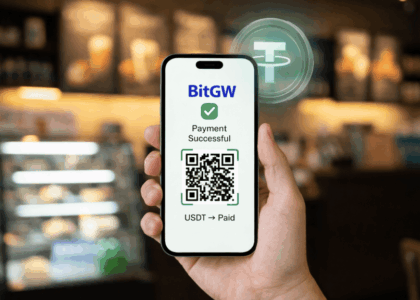
Businesses are increasingly exploring stablecoins for international payments and treasury management. Cross-border transfers that once required multiple intermediaries and several business days can now be completed significantly faster.
For users in emerging markets, stablecoins provide access to dollar-denominated value without requiring traditional banking infrastructure.
For fintech companies, stablecoins create opportunities to build new payment products that operate around the clock rather than within banking hours.
This shift is important because it signals a broader evolution.
Stablecoins are no longer serving only the crypto economy. Increasingly, they are becoming part of the global financial system itself.
Why Regulation Is Accelerating Adoption
For many years, regulatory uncertainty represented one of the largest barriers to institutional participation in digital assets.
Financial institutions require clear standards regarding reserves, issuance, compliance, custody, and risk management before they can deploy capital at scale.
Recent regulatory developments across major jurisdictions have begun to provide that clarity.
Rather than slowing innovation, regulatory frameworks are helping establish the trust necessary for broader adoption.
As standards become more defined, banks, payment providers, asset managers, and large enterprises are gaining greater confidence in integrating blockchain-based settlement systems into their operations.
The result is a shift from experimentation toward implementation.
Stablecoins are increasingly being viewed not simply as crypto products, but as components of modern financial infrastructure.
The Rise of Tokenized Real-World Assets
As stablecoin adoption grows, attention is turning toward the assets that support them.
Every stablecoin system relies on collateral. Historically, access to high-quality collateral such as government bonds and money market instruments has been concentrated among large institutions.
The emergence of tokenized real-world assets (RWAs) is changing this dynamic.
By bringing traditional financial assets onto blockchain networks, tokenization increases transparency, auditability, and operational efficiency. It also expands access to financial products that were previously limited to institutional participants.
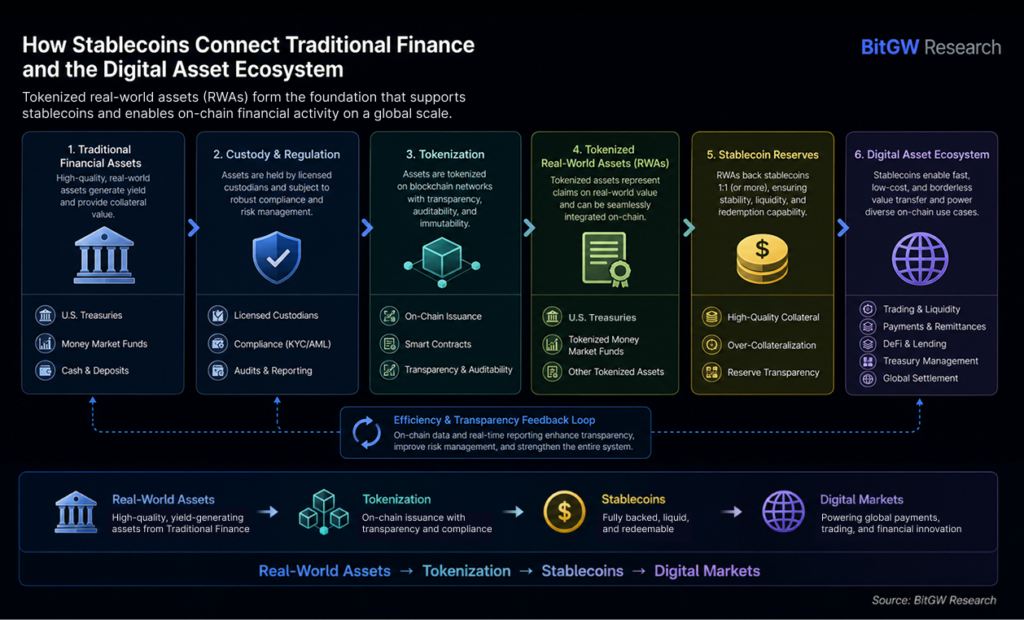
Tokenized U.S. Treasury products have already become one of the fastest-growing segments of the digital asset industry. More importantly, they demonstrate how blockchain infrastructure can modernize existing financial markets without changing the underlying risk profile of the assets themselves.
For stablecoins, tokenized collateral represents a significant step toward creating more scalable and transparent financial systems.
Interoperability Will Define the Next Phase
As the stablecoin ecosystem continues to expand, one challenge becomes increasingly important: interoperability.
Users should not need to understand which blockchain a stablecoin operates on, how bridges function, or how liquidity moves between networks.
Just as internet users do not think about the underlying protocols that route information globally, future financial users should not need to understand the technical complexity behind value transfer.
The next phase of stablecoin adoption will depend on infrastructure that enables seamless movement across networks, institutions, and jurisdictions.
Success will be measured not by the number of stablecoins that exist, but by how easily value can move between them.
From Trading Tool to Financial Infrastructure
The evolution of stablecoins mirrors the broader evolution of the digital asset industry itself.
What began as a solution for crypto trading has become a foundational component of a much larger financial transformation.
Stablecoins now support:
- Digital asset trading
- Global liquidity distribution
- Cross-border payments
- Treasury management
- Settlement infrastructure
- Tokenized asset ecosystems
As regulation matures, institutional participation increases, and blockchain infrastructure becomes more interoperable, the role of stablecoins will continue to expand.
The digital economy requires financial rails that are global, programmable, transparent, and available around the clock.
Stablecoins are increasingly proving to be one of the most effective ways to deliver that infrastructure.
Conclusion
Bitcoin introduced the concept of decentralized digital value. Ethereum expanded what could be built on blockchain networks.
Stablecoins, however, may ultimately prove to be the bridge that connects digital assets with the broader global economy.
For exchanges such as BitGW, stablecoins are more than a trading instrument. They are the foundation that enables liquidity, efficiency, and accessibility across digital markets.
As the industry moves toward a more connected and regulated future, stablecoins are evolving from a supporting tool into a core layer of global financial infrastructure.
The future of digital assets may be built on many innovations, but increasingly, stablecoins are becoming the foundation upon which everything else operates.