
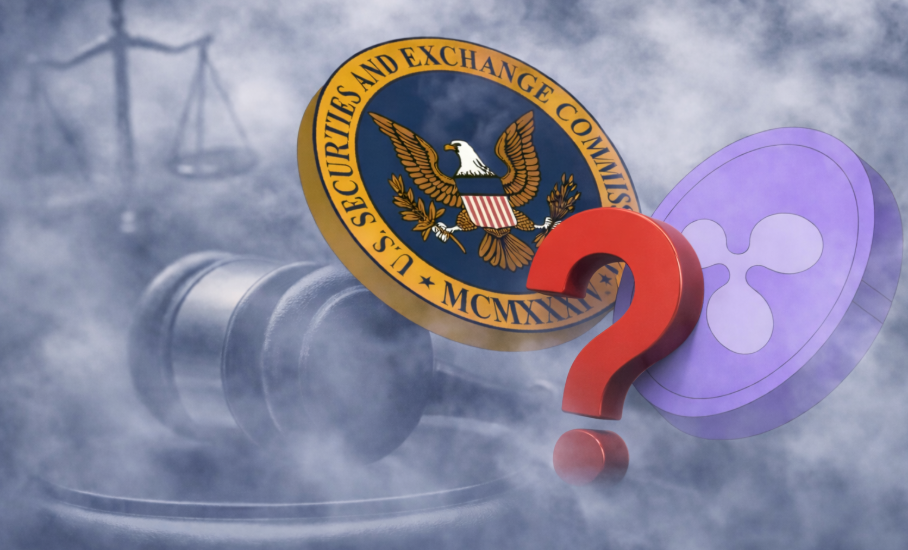
As of June 2023, the crypto market is closely watching the ongoing legal dispute between Ripple and the U.S. Securities and Exchange Commission (SEC), currently before the U.S. District Court for the Southern District of New York.
While no final ruling has yet been issued, many market participants view the case as approaching a critical phase, with growing attention on how the court may interpret XRP’s status in secondary market trading, particularly on cryptocurrency exchanges.
What the Market Is Watching
At the center of current expectations is a key legal question:
Could the court distinguish between XRP’s original issuance and its trading on secondary markets?
If such a distinction were to be recognized, it may signal that XRP transactions on exchanges do not automatically fall under U.S. securities laws. Although no outcome is guaranteed, this possibility has become a focal point for investors, exchanges, and the broader digital asset industry.
Potential Market Impact if Legal Clarity Emerges
Should the court offer guidance favorable to secondary market trading, several outcomes are widely discussed—though not assumed—as of June 2023:
1. Market Repricing of XRP
XRP has traded under prolonged regulatory uncertainty. A partial clarification could prompt a rapid reassessment of risk, potentially leading to heightened volatility and upward price movement as uncertainty diminishes.
2. Exchange Listing Reconsideration
Major U.S. exchanges that previously limited or suspended XRP trading may reevaluate their positions. Platforms such as Coinbase and Kraken are frequently mentioned by market observers as potential candidates to reassess XRP support, should legal risk perceptions change.
3. Improved Liquidity Conditions
Clearer regulatory interpretation could encourage deeper liquidity and increased trading volume, particularly if market participants regain confidence in XRP’s compliance outlook.
Why This Case Is Viewed as a Possible Turning Point
Beyond XRP itself, the Ripple case is increasingly seen as a potential test of broader regulatory assumptions:
- Whether secondary market trading can be legally separated from token issuance
- Whether all digital assets should be presumed securities by default
- How far existing securities law extends into open-market crypto trading
If addressed by the court, these questions could influence future regulatory approaches—not only for XRP, but for the wider crypto market.
Industry Sentiment in Mid-2023
By June 2023, industry sentiment remains cautiously optimistic but restrained. While some believe the case could mark a regulatory inflection point, others expect any clarity to arrive incrementally rather than through a single, definitive ruling.
Market participants generally agree on one point: the court’s interpretation—whatever its scope—will likely have meaningful implications for how digital assets are traded and regulated in the United States.
Conclusion
As the Ripple case progresses through mid-2023, anticipation continues to build around the treatment of XRP in secondary markets. While outcomes remain uncertain, even partial legal clarification could reshape market expectations, influence exchange behavior, and contribute to a broader reevaluation of crypto regulation.
Regardless of the final decision, this case is already playing a significant role in shaping the dialogue around digital assets and U.S. securities law.
This article reflects forward-looking analysis as of June 2023 and is intended for informational purposes only. It does not constitute legal or investment advice.